Benromach Peat Smoke 2005-2013 67ppm

Benromach_Peat_Smoke

The current Benromach Distillery is owned by the independent bottler Gordon & MacPhail. While the name and site dates back to 1898, G&M installed all new equipment after they bought the distillery in 1992. The old equipment had previously been sold off or junked. Instead of replicating the old stills, G&M designed and built smaller stills. They began releasing whisky from the old stocks and then when their new whisky was ready they began selling from the new stocks. These two spirits, however, are effectively from different distilleries despite having the same name.

For their own distilled whiskies, G&M wanted to recreate an older style of Speyside whisky. While Speyside whiskies are now famous for being smooth and sweet without peat, they used to contain moderate levels peat, when peat was a major fuel source in the area. The Benromach 10 year old represents the whisky profile they were trying to create, while the Benromach Peat Smoke is more of an experimental bottling to see what a heavily peated speyside would be like.

Continue reading

Ardbeg Perpetuum Review: Distillery Release vs Standard Release

Ardbeg_Perpetuum

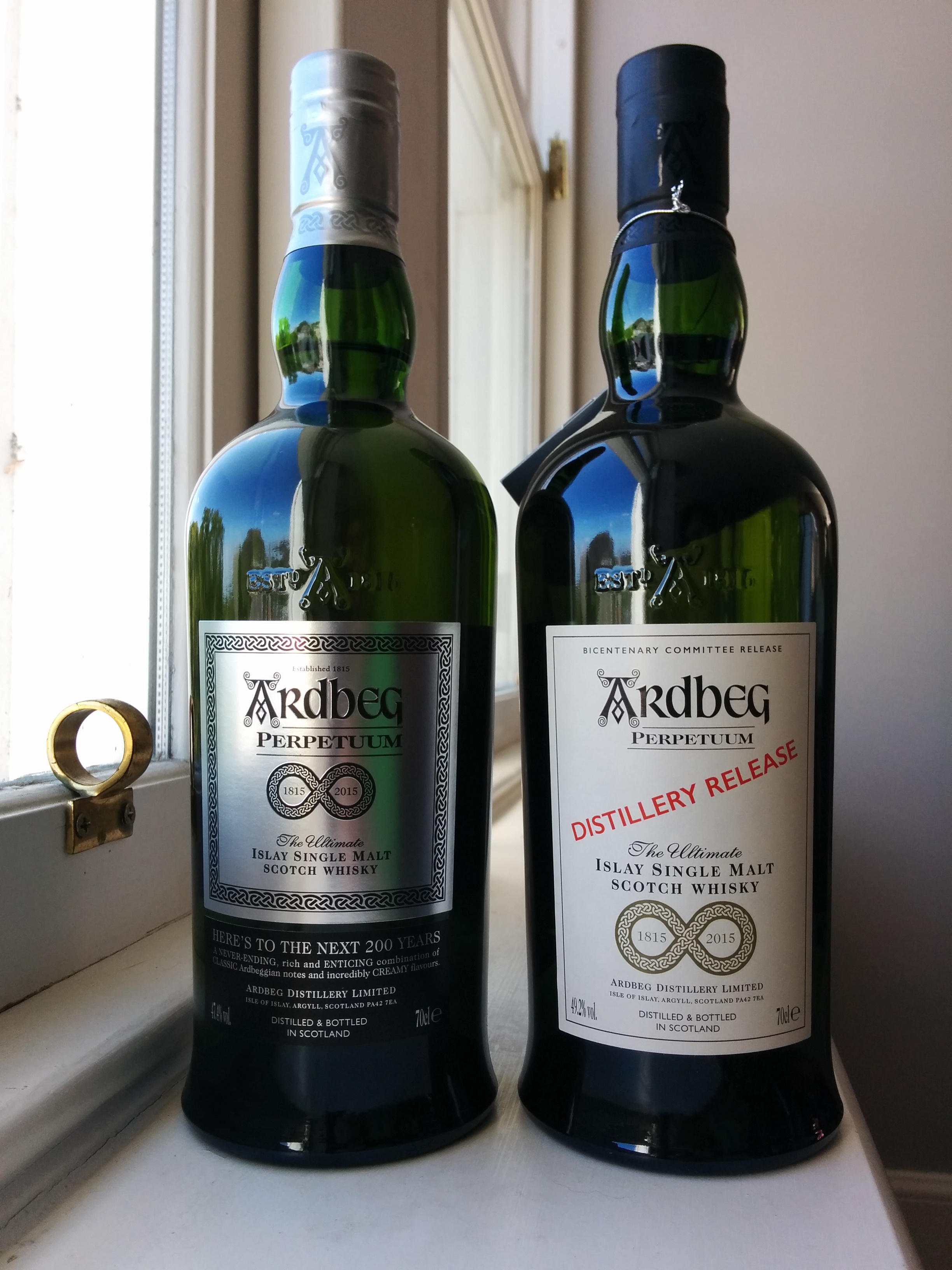
After learning that there were two versions of the Ardbeg Perpetuum, we’ve been anxious to do a comparison tasting and now we’ve finally done it!

Just in case you are unaware, Ardbeg first released the Perpetuum Distillery Release (~£70) some time in March of this year. As the name suggests it was only available for purchase at the distillery but they made a small number available online to UK Ardbeg Committee members. The Standard Release (~£85) was made available at Ardbeg Embassies on Ardbeg Day (May 30th). They are supposedly from the same vatting but diluted to different ABV’s (DE 49.2% vs SE 47.4%). While they are both Non-Age Statement whiskies, a range of casks from the very old to the very young were used to make these expressions. The idea behind the cask selection was to impart character from all of Ardbeg’s history. An interesting concept for sure, but how does that translate to taste?

For this review, both TheMadVatter and AliceInWhiskyland chimed in to give two perspectives on the two versions.

Continue reading

Glenmorangie Signet Review

Glenmorangie_Signet2

While you may not have tried this particular expression of Glenmorangie, you most probably have seen it. The Signet seems to be at every airport duty free shop I’ve been to. It is often encased in glass surrounded by black and golden decorations based on the pattern on the front label. It comes with a spiffy looking black box which to me screams “gift for Chinese business exec”. I am sure quite a few have been used for just that purpose.

What’s interesting about the Signet is that they used chocolate malt (a heavily roasted malt that is dark brown like chocolate) and “designer casks” from American oak. They also claim to have used some 30 year old whiskies from the time when they used to do their own floor maltings. A nice touch, but this is still a non-age statement whisky. At this point it seems like a lot of companies are using this marketting ploy of stating that some incredibly old and rare whiskies have gone into certain NAS expressions. What I wonder is how much of this was done for marketting purposes and how much for flavour. I suspect they don’t use that much from the old stock which would suggest that the implications on flavour are minimal at best. I am a skeptic at heart so I could very well be wrong here. Meh.

Disitllery: Glenmorangie Distillery

Age: NAS

ABV: 46%

Cask: Designer Casks

Price: ~£125 (£123.95 at Master of Malt)

Continue reading

SMWS 50.65 (Bladnoch) Tutti Frutti

SMWS_50.65

Cask strength old Bladnoch? Yes please! I am always on a lookout for an SMWS bottling of Bladnoch. Or any Bladnoch for that matter. Interesting thing about this outturn is that on the menu there is a “Closed Distillery” stamp on the description for this bottling. This is interesting for several reasons. First of all, I guess SMWS are pushing to incite the current whisky frenzy for closed distilleries. Secondly, Bladnoch is down right now due to issues with the ownership but calling it a closed distillery right now is a bit too soon and sounds like a joke in poor taste. C’mon guys! It’s just down on its luck! Don’t kick it while it’s down. In all seriousness, I hope Bladnoch gets back on its feet because there isn’t much Bladnoch whisky out there as it is and I don’t want to fight in a post apocalyptic whisky world for the last remaining bottles of this elixir.

Moniker: Tutti Frutti

Distillery: Bladnoch

Age: 25 years old

Cask: Refill Bourbon

ABV: 52.5%

Distill Date: 26th January 1990

Outturn: July 2015

Continue reading

SMWS 27.109 (Springbank) Guns on the Grouse Moor

SMWS_27.109

Haven’t seen too many Springbanks in the SMWS lineup as of late so I was quite excited when this bad boy popped up on the menu. I have a theory about the rarity of independent bottled Springbanks that goes like this: Springbank owns the independent bottler Cadenheads so why would they sell casks to competing independent bottlers? Right? I dunno maybe it’s a crackpot theory. Anyway, great to see a Springbank at SMWS.

Moniker: Guns on the Grouse Moor

Distillery: Springbank

Age: 16 years old

Cask: Refill Gorda

ABV: 58.3%

Distill Date: 31st May 1998

Outturn: June 2015

Continue reading

Laphroaig Cairdeas 2015 Feis Ile (200th Anniversary) Review

Laphroaig_Cairdeas_2015_1

How many businesses do you know that are 200 years old and still running? It’s not a long list. Laphroaig celebrates it’s 200th anniversary this year with this special bottling. Survival in the whisky industry requires long term thinking. Distillers must always think about what will be happening 10-15 years down the line when their products hit the market. It looks like Laphraoig has done just that as this year’s special “friendship” bottling contains 11-12 year old whisky that was produce as close to the old Laphroaig way as possible. All the malt came from their own maltings and only the 2 smallest stills were used for distillation. It’s as Laphroaig as Laphroaig can get.

If you’ve ever been to Laphroaig and taken a tour then you’ll know that their malting floor is not that large (by today’s standards) so it stands to reason that they were probably not able to make much of this stuff. This suspicion is somewhat backed by their move to use a ballot system for online sales of their 2015 Cairdeas bottling. At present there seems to be only 2 ways of getting a bottle of this: go to Laphroaig right now or be a “Friend of Laphroaig” and then enter a raffle for the chance to purchase online (click here for more info on that).

Continue reading

Longrow Red Pinot Noir (4th Edition) 12 Year Old

Longrow_Red_Pinot_Noir_1         Longrow_Red_Pinot_Noir_2

At last! Another Longrow Red released! I am a big fan of the Longrow Red series and I am pleased to see that they are keeping up the good work at Springbank. Longrow is the heavily peated spirit that comes from the Springbank Distillery. Basically Springbank does three core expression lines: Springbank, Hazelburn, and Longrow. Springbank is the most well known and has moderate levels of peat. Hazelburn is unpeated and is named after an old neighboring distillery that Springbank enveloped. Fun fact: Masataka Taketsuru, the father of Japanese whisky, spent a few months at the original Hazelburn learning the craft (this was part of his honeymoon with his new wife Rita). Longrow was Springbank’s response to the peat monsters coming out of Islay. Basically Springbank dedicates certain parts of the year for distilling each type of spirit. No worries, they give the stills a good wash between each.

The Longrow Red series was started in 2012 with the Cabernet Sauvignon.The idea behind the line is to experiment with partial or full maturation of Longrow spirit in various red wine casks (Port is a wine!).

When we went to Campbeltown to visit Springbank Distillery, we were told that Springbank had initially intended to release 4 editions of Longrow Red thus the Pinot Noir should be the last (although the sudden rise popularity may convince Springbank to change their minds).

From looking around on the web, it seems that the first edtion, Cabernet Sauvignon, was not favorably received. The Shiraz seemed to enter the market unnoticed and there were few reviews to indicate the general consensus on it. Then when the Port came out last year, Longrow Red seemed to instantly become a hit. The popularity of the Port meant that there was much anticipation for the Pinot Noir release this year. Even though there were 9000 bottles for each edition, the release of the Pinot Noir saw a shift in attitude amongst retailers, with many retailers limiting sales to one bottle per person.

So far these are the editions of Longrow Red:

1st Edition: Cabernet Sauvignon 11 years 53.7% (7 years ex-bourbon 4 years Cabernet Sauvignon)

2nd Edition: Australian Shiraz 11 years 53.7% (6 years ex-bourbon 5 years Australian Shiraz)

3rd Edition: Port 11 years 51.8% (11 years port)

4th Edition: Pinot Noir 12 years 52.9% (~11 years ex-bourbon ~1 year in New Zealand Pinot Noir)

So it’s interesting to note that this is the first Longrow Red to not be 11 years old. It also has the shortest maturation in a wine cask.

Continue reading

Laphroaig 18 Year Old

Laphroaig_18

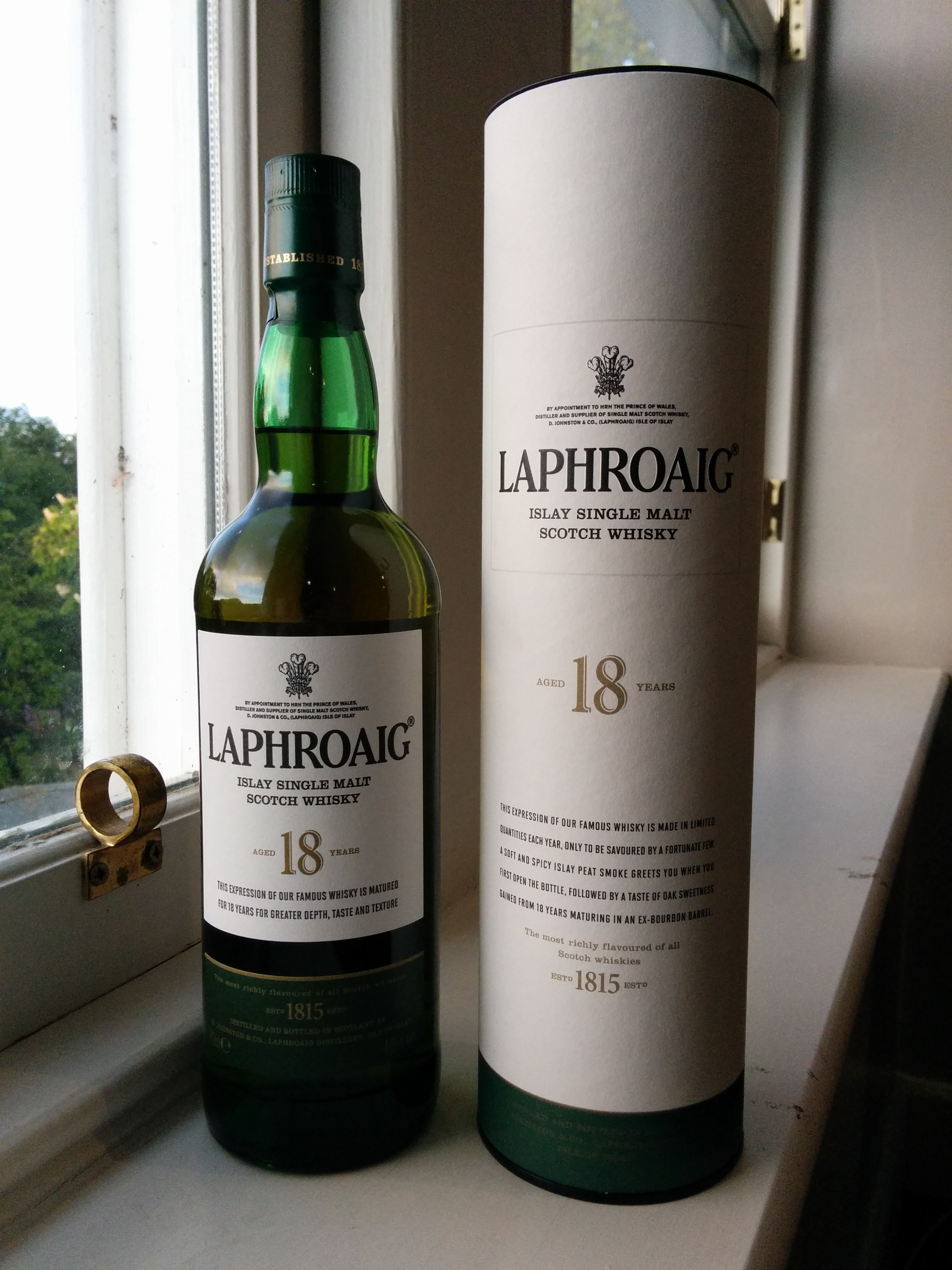
The Laphroaig 18 made it’s debut in 2009. It filled a spot left open by the discontinued 15 year old. I am not sure why it is bottled at the unusual 48% but I’d like to think it is because they thought it was the right ABV to carry the flavours through and felt it was important enough to shrug off the standard 40%, 43%, and 46% ABV’s of the industry. There are some rumours that they will be phasing out this particular expression in 2016. It shall certainly be unfortunate and I fear it may be a move toward more NAS whiskies like Macallan have been doing. Well let’s hope for the best!

Distillery: Laphroaig

Age: 18 Years Old

ABV: 48%

Price: ~£90 (£85.79 from Master of Malt)

Continue reading

Glenfarclas 17 Year Old

Glenfarclas_17

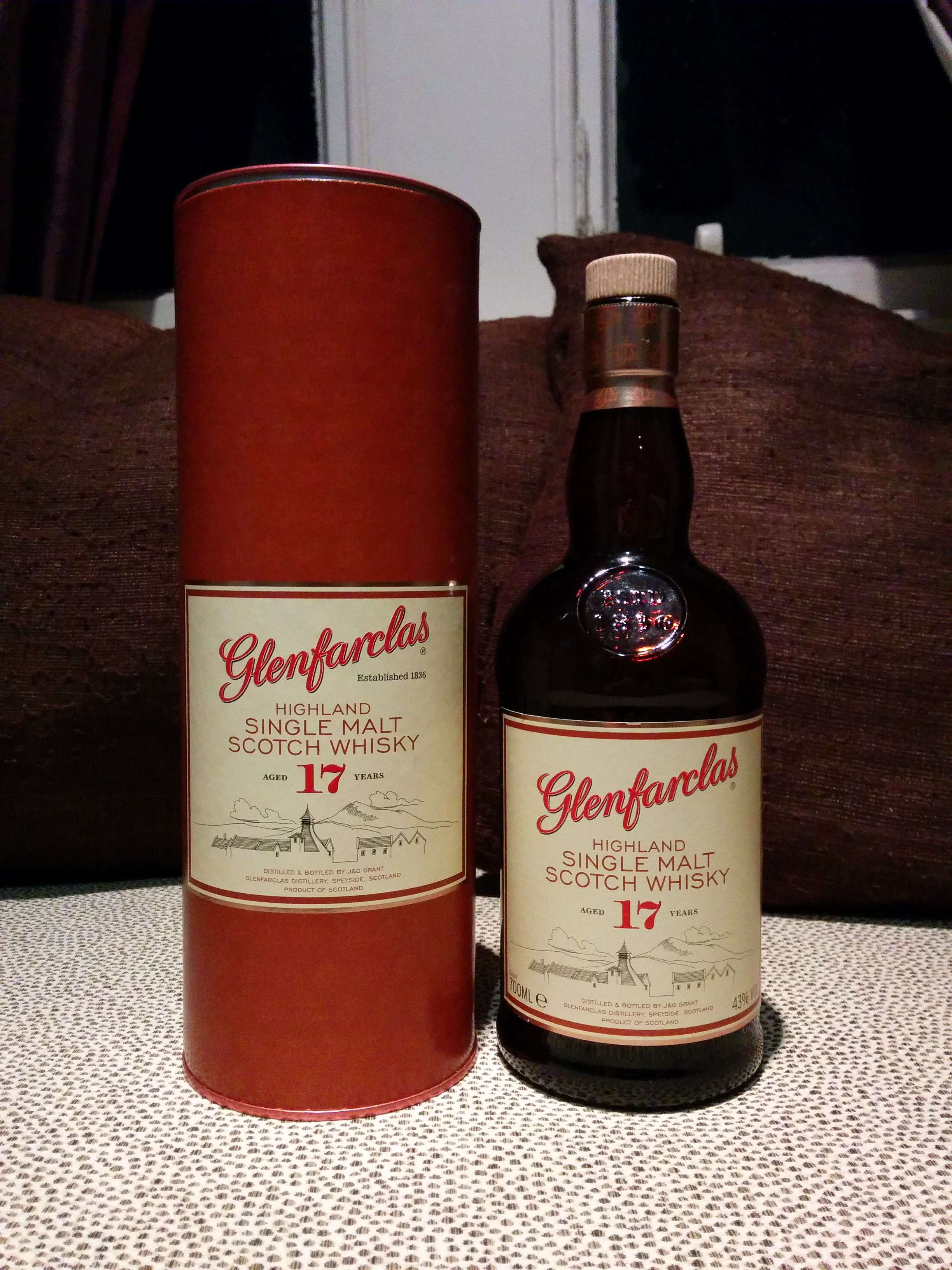
Glenfarclas is one of the last family owned distilleries. It has been owned (in some shape or form) by the Grant family since 1865. That’s some real history right there. The distillery was built in 1836. As a family owned distillery, Glenfarclas has a degree of freedom that very few distilleries enjoy. Lack of short sighted pressures from investors has resulted in a good number of older casks. Some of which have been bottled as part of the Family Casks releases. Glenfarclas was also the distillery which began the single cask adventures of Phillip “Pip” Hills that eventually led to the creation of the Scotch Malt Whisky Society.

Distillery: Glenfarclas

Age: 17 Years Old

ABV: 43%

Price: ~£90 (£63.95 from Royal Mile Whiskies)

Continue reading

Ben Nevis 22 Cadenhead’s Small Batch 53.5%

BenNevis_22

Ben Nevis is quite an interesting distillery. At least in my book. As the name would suggest the distillery lies at the foot of Ben Nevis, the tallest mountain in Scotland. It is currently owned by Nikka and a great deal of the whisky produced there is shipped directly to Japan for use in their blends. I believe Nikka Black 8 year old gets the lions share of the spirit but it also shows up in the Pure Malt series. Due to it’s heavy usage in Japanese blends, you don’t see too much of it on the shelves as a single malt. They have a couple standard expressions and some really expensive weird expressions aged in white port and ruby port. So finding a bottle of Ben Nevis was a real treat for me. I have found the independent bottlings of Ben Nevis to be quite exciting.

Distillery: Ben Nevis

Bottler: Cadenhead

Age: 22

Cask: Bourbon

ABV: 53.5%

Continue reading